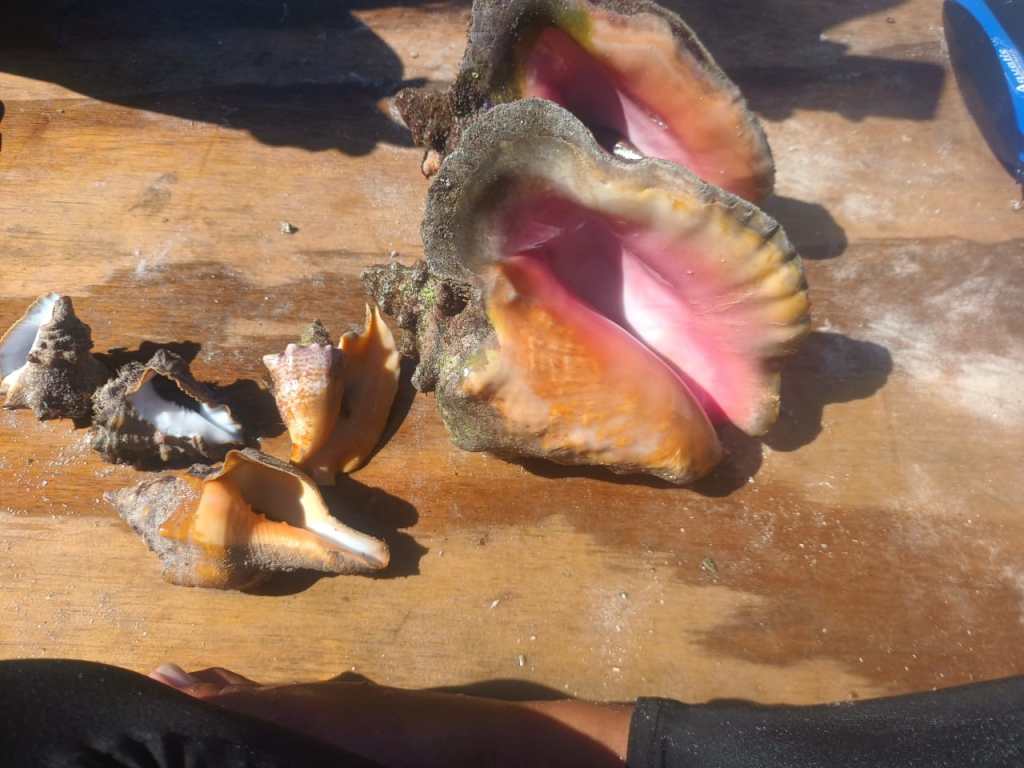
In 2022 I was a volunteer here in Puerto Morelos. GVI work with partners at CRIP to monitor the Queen Conch at Chinchorro. Queen Conch are so beautiful, and apparently they are also delicious. The meat is sold, and the adults shells are so beautiful they are also bought by tourists as souvenirs. Years ago the fishermen at Chinchorro realised that they had overfished these Gastropoda and so they put a ban on fishing them. They started working with CRIP to monitor the levels of Queen Conch and the numbers are used to determine the yearly fishing quota. Gvi send three people for each monitoring trip to help out with the collection of Gastropods. I was asked to go and I was so excited!! Unfortunately as the island is about 40mph from the mainland the boat trip can’t be done if there is a storm and a big storm came in, it delayed the trip which meant I couldn’t go. A lovely dive master called Ben, who I met here and is one of my favourite places ever people, had been to Chinchorro and said it was the best week of his life, so I left Mexico sad that I hadn’t been involved in the data collection that time. Shortly after arriving this time, Miguel told me that the Chinchorro trip was coming up and that I was going!! I was so excited!
CRIP go to the island and set up, then for two days they rent two boats from local fishermen and three people from GVI and CRIP go out on each boat with a Captain and two fishermen and spend the day gathering conch. The sites are predetermined and the GPS coordinates are entered into a hand held device. At the site a weighted line is dropped in. It has a big net bag attached, as well as a rope that it used to determine the radius of the circle from which the conch are gathered. The sites range in depth and once the weight is dropped everyone apart from the Captain jumps in and free dives to gather all the gastropods in the marked area. They are all placed into a bag and soon as the bag is full it is put back on the boat and all of the queen conch are measured. The length of the shell and the thickness of the lip are both measured and recorded, and then the creature is dropped back into the sea. All gastropods are identified and recorded. At each site there are 4 more samples taken at 100m metre intervals and then the boat moves to the next coordinate.
In 2022 I was a volunteer here in Puerto Morelos. GVI work with partners at CRIP to monitor the Queen Conch at Chinchorro. Queen Conch are so beautiful, and apparently they are also delicious. Years ago the fishermen at Chinchorro realised that they had overfished these Gastropoda and so they put a ban on fishing them. They started working with CRIP to monitor the levels of Queen Conch and the numbers are used to determine the yearly fishing quota. Gvi send three people for each monitoring trip to help out with the collection of Gastropods. I was asked to go and I was so excited!! Unfortunately as the island is about 40mph from the mainland the boat trip can’t be done if there is a storm and a big storm came in, it delayed the trip which meant I couldn’t go. A lovely dive master called Ben, who I met here and is one of my favourite places ever people, had been to Chinchorro and said it was the best week of his life, so I left Mexico sad that I hadn’t been involved in the data collection that time.
Shortly after arriving this time, Miguel told me that the Chinchorro trip was coming up and that I was going!! I was so excited!

CRIP go to the island and set up, then for two days they rent two boats from local fishermen and three people from GVI and CRIP go out on each boat with a Captain and two fishermen and spend the day gathering conch. The sites are predetermined and the GPS coordinates are entered into a hand held device. At the site a weighted line is dropped in. It has a big net bag attached, as well as a rope that it used to determine the radius of the circle from which the conch are gathered. The sites range in depth and once the weight is dropped everyone apart from the Captain jumps in and free dives to gather all the gastropods in the marked area. They are all placed into a bag and soon as the bag is full it is put back on the boat and all of the queen conch are measured. The length of the shell and the thickness of the lip are both measured and recorded, and then the creature is dropped back into the sea. All gastropods are identified and recorded. At each site there are 4 more samples taken at 100m metre intervals and then the boat moves to the next coordinate.
Over the two days 35000 m2 are covered! At the end of each day all of the data is written down so that it can be taken back to the base and recorded for INAPESCA to determine the fishing quotas.
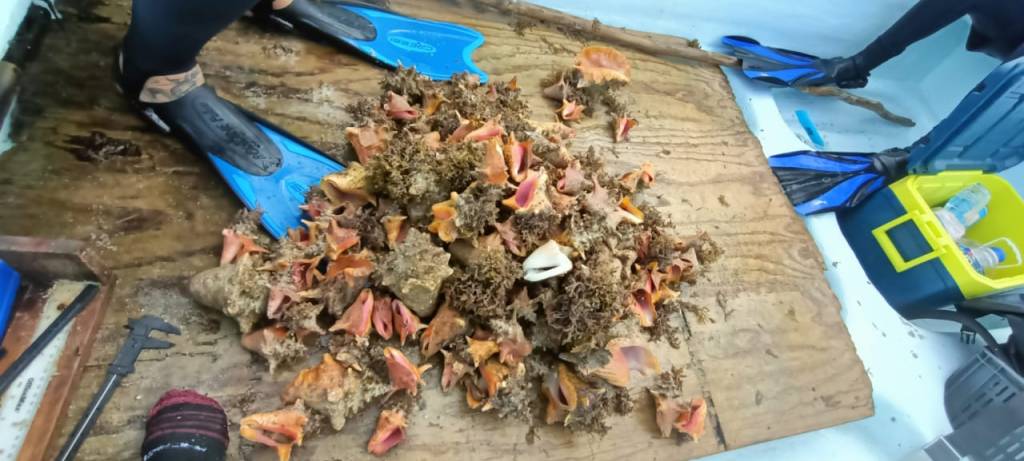


After two days of monitoring all of the equipment is packed up and the fishermen take the GVI volunteers and CRIP staff back to Mahahual for the long drive home.

 Abi's Deep Dive
Leave a comment