On a marine conservation project there is lots of diving. We typically plan three dives a day for our participants, 10 people can go out on the boat together and an instructor or dive master (DM) needs to be with each smaller group. Puerto Morelos is within a Marine Protected Area (MPA) and so there are also rules that mean there has to be someone who has done a park guide course with up to 6 divers. Alongside the monitoring where we gather data we train participants in diving and science. People can do any course here from the first level of diving: open water which allows you to dive to 18m to their instructors course which takes time. Science is taught specific to the group you are put in when you arrive: coral or fish. I was put in invertebrates when I arrived last year, but there is no one currently teaching that. Participants are taught to recognise different fish and coral and to accurately size them under water. There are exams to do, then when all exams are passed, underwater spots where their knowledge is tested on the job. Only when all spots and sizing tests are passed, the participant can start doing the monitoring dives to actually gather data. We schedule different dives so that each participant can progress with their learning, dive sites are chosen to correspond with the tasks that need to be completed. We also do algae grabs where we gather algae for the crabs our partners at CRIP are breeding, and DAD dives (Divers Against Debris) which is more of a fun dive where we pick up any rubbish we see, which we always do anyway!
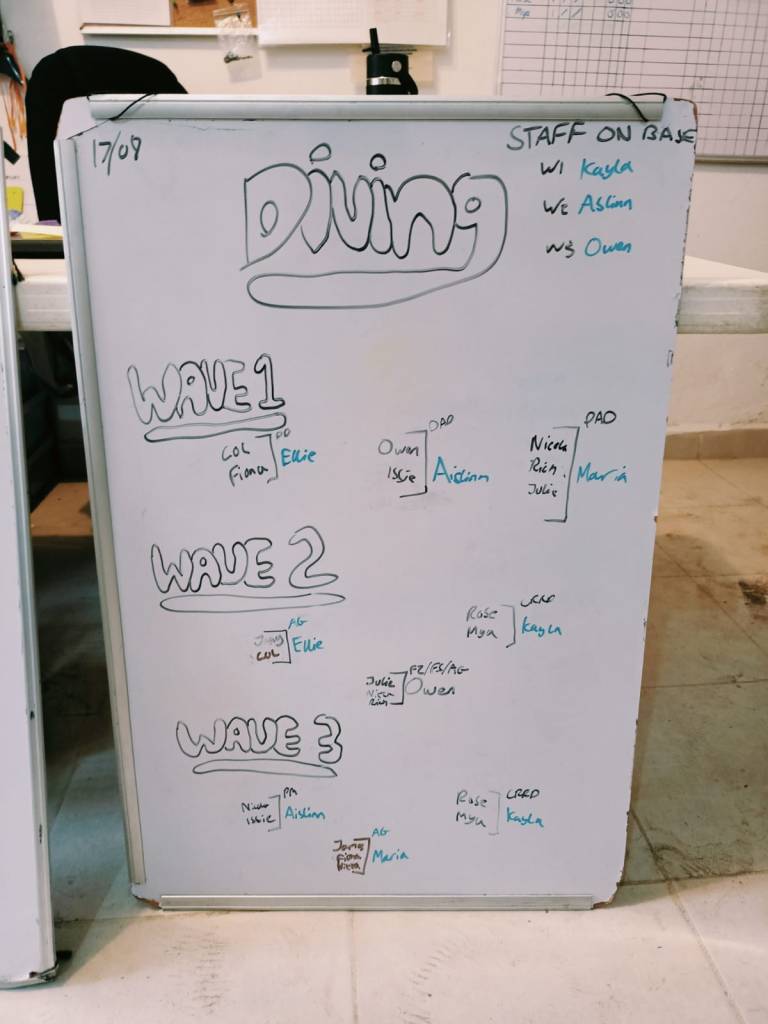
I will be doing my DM here, but at the moment as a stress and rescue diver can jump onto dives if there’s space. We have had so many participants that I haven’t been able to do much diving up to now, so I’m really looking forward to numbers dropping a little so I can be underwater more!
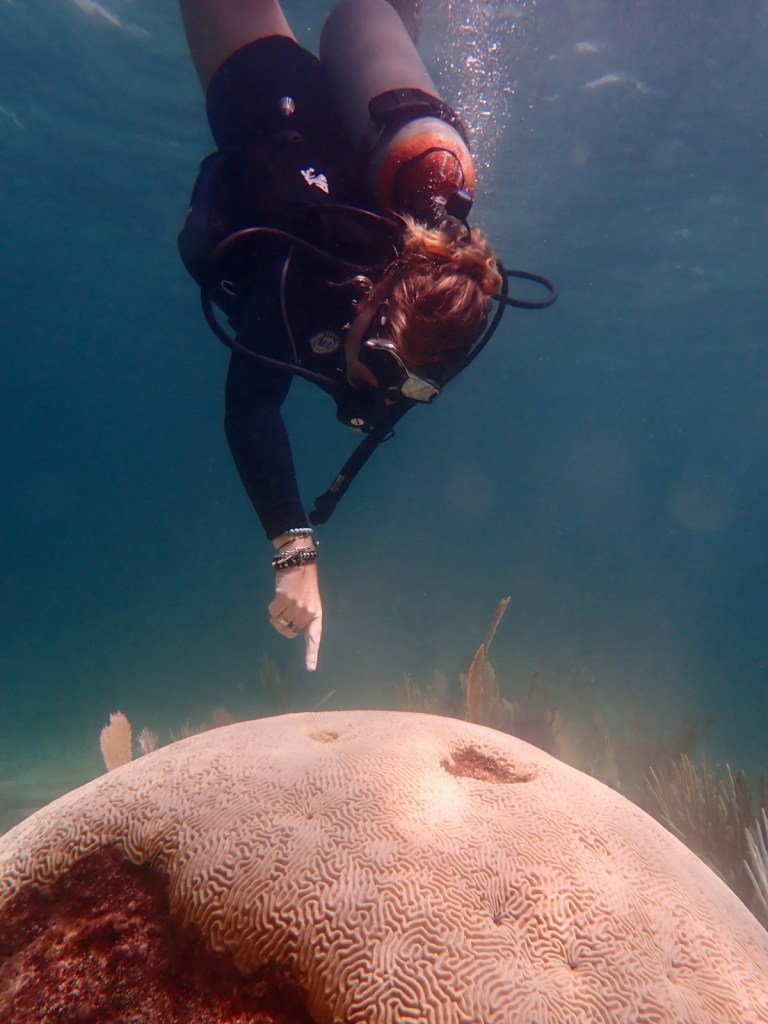
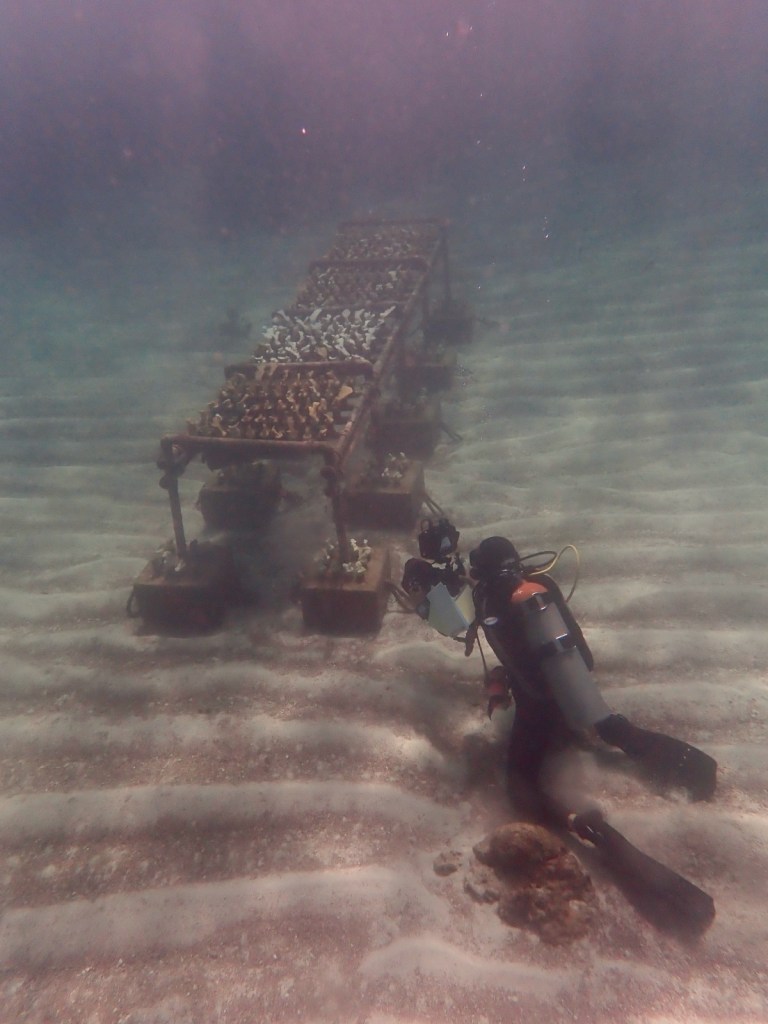
We had a request from Healthy Reefs for us to lead a photographer on a couple of dives to show them how bad the coral bleaching is. There is a worldwide bleaching event because the sea temperatures are too high and we are seeing corals here get more bleached by the day. It’s shocking how much they’ve changed just in the time I’ve been here. Staff and two participants went out for two dives so that this can be documented, and we got to just float around while the photographer with her incredible camera got all the footage needed. We have a participant here at the moment, Richard, who is great with a camera so he was also taking photos. He got me posing above a brain coral and a few of the photographer with her very fancy camera.


We were all making the most of an extra couple of dives and feeling sad looking at how bad the bleaching is, when I spotted a sleeping nurse shark!! I was excitedly tapping my tank to get everyone’s attention while I watched this beautiful creature having a snooze. Richard got a photo and Maria had her GoPro so took a video which I’ve put on my Instagram. I love seeing all of the life underwater, from the tiniest shrimps to the dopey porcupine fish, but seeing the larger creatures like eagle rays and sharks definitely raises my pulse a little more.

This one was about 2 metres long and was tucked under the reef. Most sharks have to swim constantly to breathe, but nurse sharks have adapted so that they can stop swimming and breathe by using their cheek muscles to pump water into their mouth and towards the gills (buccal pumping). So cool!!
They often snooze in groups, but this one was on its own presumably resting after a night of hunting. I will never get bored of seeing these beauties 🤍
 Abi's Deep Dive
Leave a comment