CONANP (Comision Nacional De Areas Naturales Protegidas) National Commission of Natural Protected Areas | Government | gob.mx (www.gob.mx) are partners of GVI Mexico. They have developed and strengthened a range of biodiversity conservation and sustainable management initiatives, addressing emerging issues and problems. They cover Protected Areas, as well as other conservation programmes. At the GVI Puerto Morelos (PM) base we are working with CONANP to monitor the turtle population.
In Puerto Morelos there are three species of turtle you may see, and all are endangered! The turtles you can see here are Green, Loggerhead and Hawksbill. CONANP are monitoring the populations as well as trying to protect the nests with night patrols and education, and responding to sightings of turtles. The GVI Turtle Project participants are assisting where they can.
Maria the Turtle Project Officer had a call one morning from CONANP to say that someone had found two hatchlings on a beach just down the road. She yelled excitedly for the turtle team, and thankfully there was also room in the truck for me! We packed up a box and gloves (turtles have salmonella in their gut, so the eggs and babies tend to be covered in it) and headed to find the hatchlings. Five minutes away is a stretch of beach lined purely by hotels, we got there and a security guard for one pod the hotels had two hatchlings in a bucket in the shade. WE had a little look and realized they were loggerhead babies! On the night walks we had seen green turtles only so this was even more exciting. The shells look different even when they are this small, they have what look like spiky ridges running down the carapace, and the necks are thicker. We collected some damp sand into our box, with no sargassum and put the hatchlings in there to keep them cool.

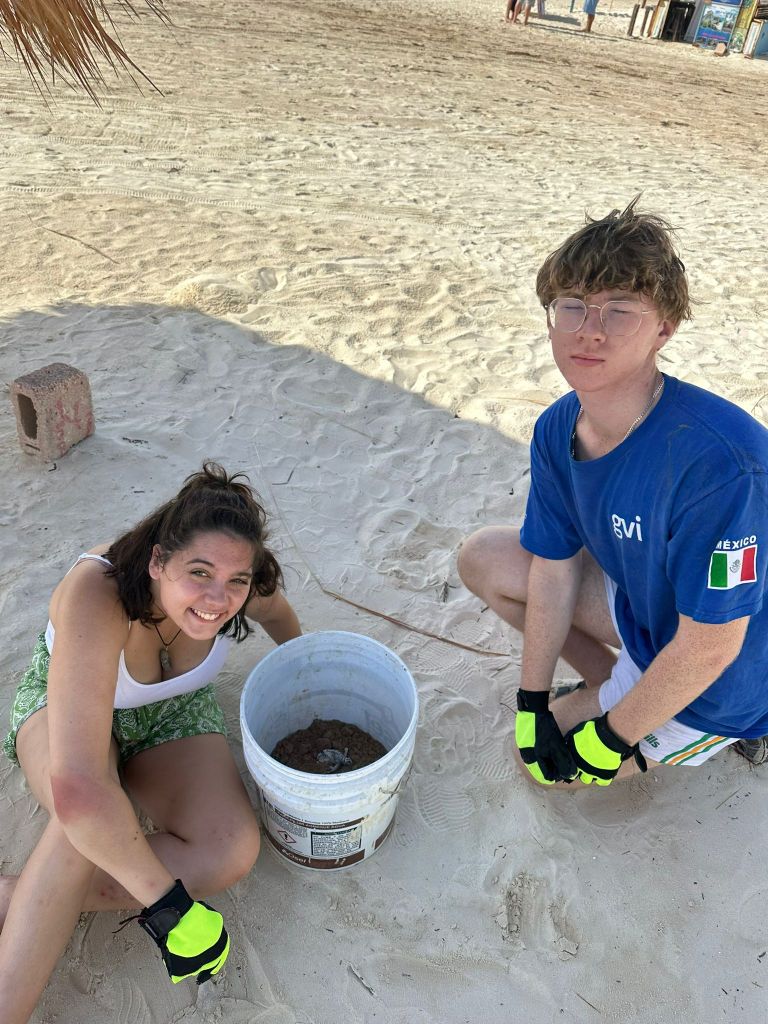
We had started a mini beach clean while we waited for CONANP to arrive when a tour guide who was working on the beach approached and said that a few days before he had seen a digger on the beach and it had put the bucket straight through the middle of a nest. Eggs were falling from the digger bucket, and it was only when our turtle hero called and reported this to CONANP that the digger left, dumping a scoop of sand on the edge of the beach. Machines are used to clear sargassum from the beach so that guests of hotels don’t have to walk through it to get into the sea. The hotels are not supposed to have any machinery on the beach during the nesting period, and they can be fined for breaching the regulations, in fact during our time on the beach a supervisor approached us and said that the hotel had known nothing about the digger on the beach, they must have come purely of their own accord to clear sargassum!!! The tour guide showed us the nest which had been marked and surrounded by tape and a sign to keep people away, and pointed out where the digger had dumped sand.
CONANP arrived, we saw another tractor while we were collecting the eggs so CONANP took photographs to report that breach as well. They knew about the nest but not the dumped sand, Erica the manager started to dig around by hand in the dumped sand to find any more eggs. It became apparent that the dumped sand had contained eggs, the sand was also mixed with sargassum, a brown algae, which produces heat as it breaks down. Turtles are subject to temperature dependent sex determination, if the eggs incubate above 31 degrees centigrade the hatchlings will be female, and if temperatures go above about 35 c development fails, at this point we were concerned not just for our little hatchlings, but also for the whole nest. Several eggs had died, and rotted, there were a few dead hatchlings, but she found another 7 viable eggs!


We covered all of the eggs and the hatchlings in sand as it was a bit too early for them to survive, they can breathe through the gaps in the sand and the damp sand also keeps them hydrated, and took them back to base in the box. The next day we checked and we had 3 hatchlings up on top of the sand so we called CONANP and agreed to meet them at the beach to release the babies!! We collected the box from base at 10pm and made our way to the beach, it was pitch black and by the time we got to the beach we had 6 hatchlings!! A local man allows CONANP to use his beach shack as a base for monitoring, and his family and lots of children had come to see the babies. We were getting ready to release them: you take them a few metres from the shore but they must find their own way to the sea as they will come back to nest there the following year, when another 2 heads popped up. After all of the trauma of a disturbed nest having been dumped with sargassum and then being moved in a box we ended up with 8 out of 9 eggs hatching!
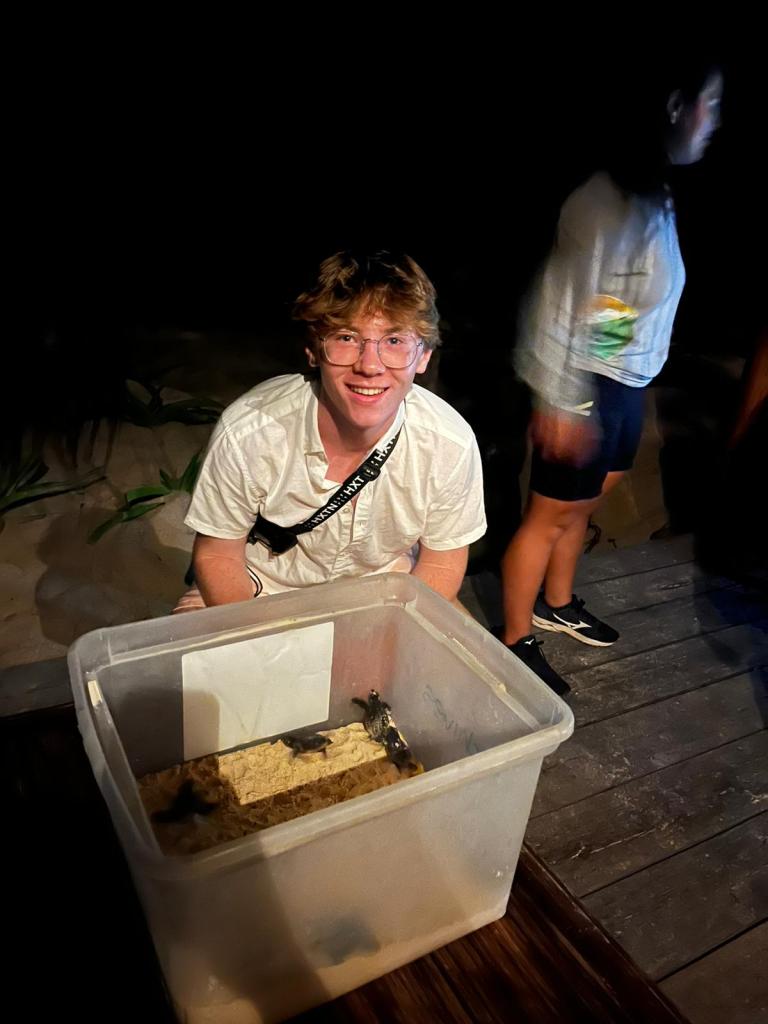
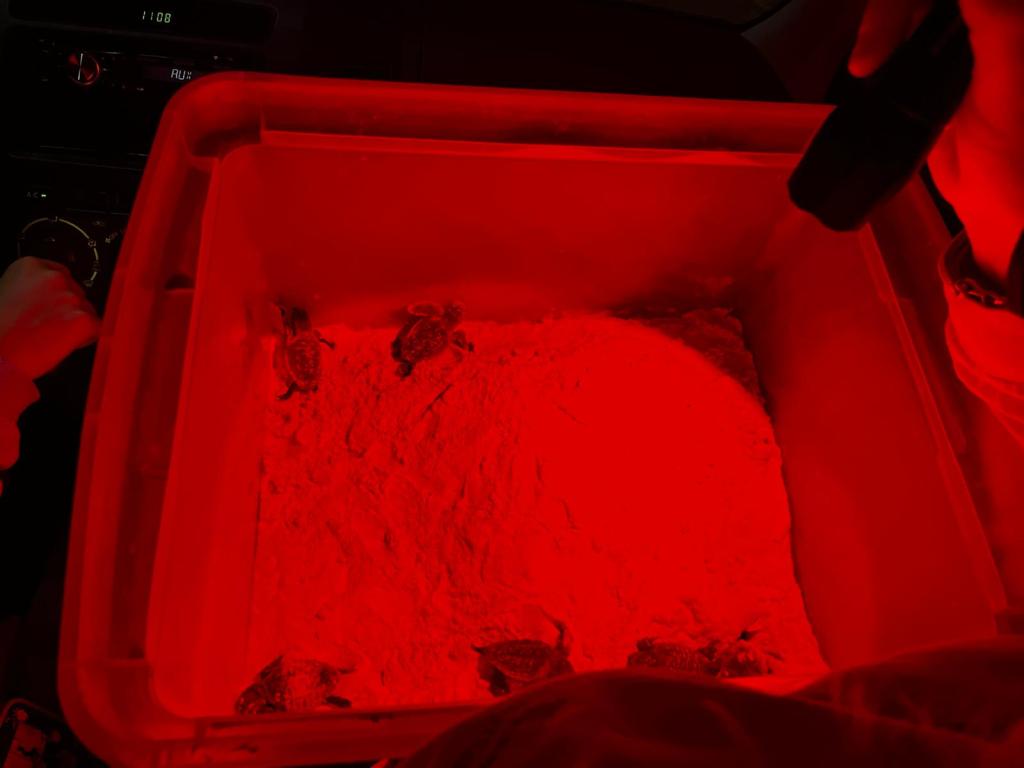
“Milagro” is miracle in Spanish, and we all definitely felt like this was a miracle. The manager at CONANP told us she hadn´t expected any of them to survive so it was emotional for all of us! The children came with us to watch chattering excitedly in Spanish, and when we released the little loggerheads we cleared the sargassum blocking the route to the sea together so all the turtles could get to their destination.
It was a magical, miraculous night which felt so special. The whole team is very grateful that we could be a part of it!


 Abi's Deep Dive
Leave a comment